Where the Paths Meet: Holding More, Not Choosing Less
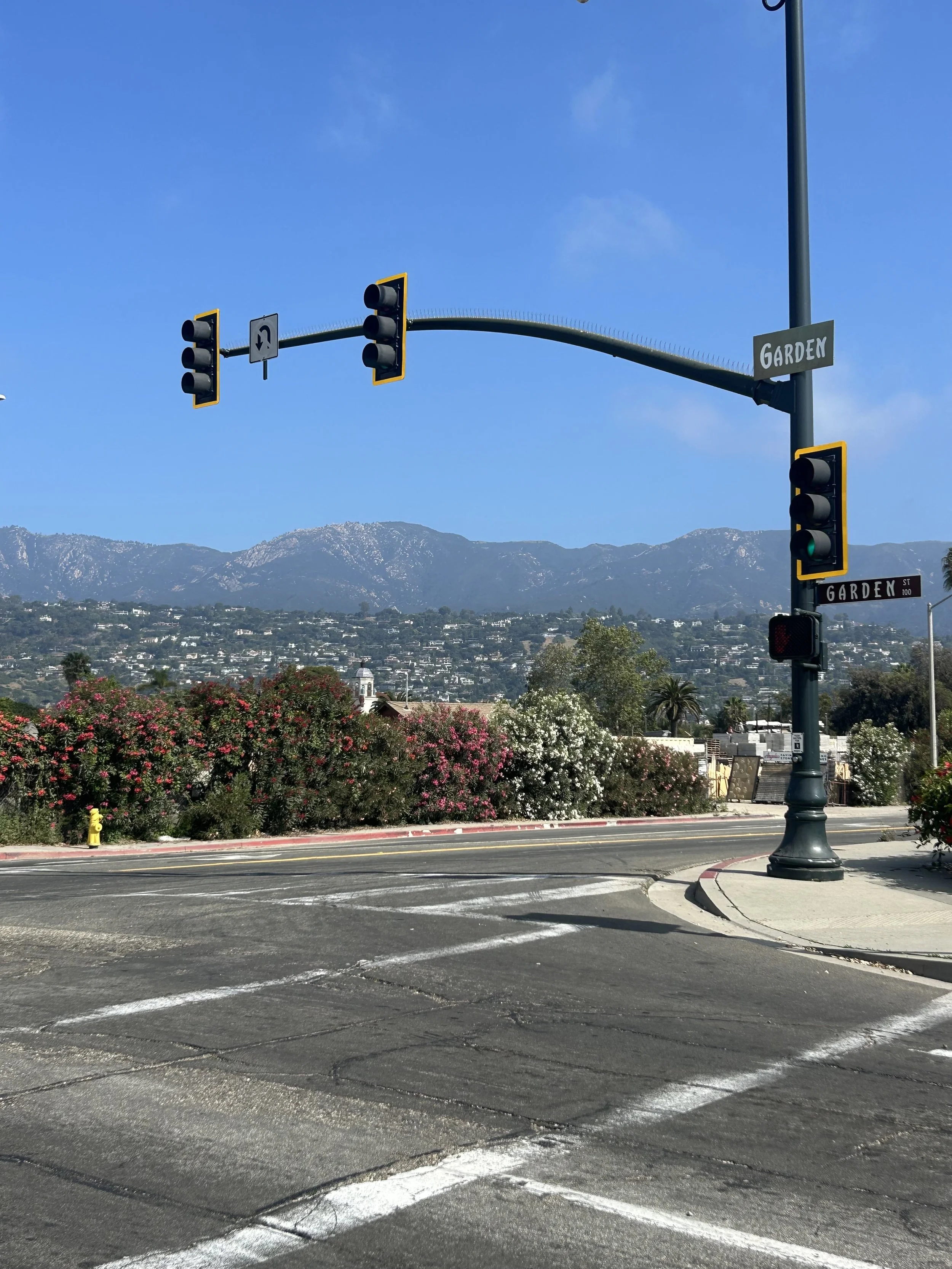
These days, more often than not, I find myself at intersections. Places where two or more paths cross at a specific point in time and space, and I have to decide whether to continue straight, turn left or right, make a U-turn, or pull over and check that my GPS isn’t frozen.
If I’m being honest, lately I’ve been pulling over more than I’ve been moving forward. Screw the GPS—it doesn’t work, at least not the way it used to. I watch others continue on while I sit just off the road that has felt so familiar for so long, considering whether the destination is even worth it.
What even is the destination anymore?
I realize the image I opened with is a physical intersection, but I’m not actually talking about driving. I’m pretty good at that by now. I’m talking about intellectual, emotional, and instinctual intersections of faith. The kind where who we are in a given moment is confronted with a new or returning thought, feeling, or instinct that asks something of us.
I’ve come to realize that constantly pulling over—choosing not to engage or disengaging altogether—serves no one. The moment itself is an invitation to lean in. Let’s step away from the driving and intersection metaphor for a bit and get into it. I might come back to it later; for now, let's see where this road takes us.
So what are some of the moments I’ve faced that have led to this internal dialogue about intersections? Sometimes it’s an off-the-cuff comment in a sermon, or a familiar passage of scripture framed in a way that feels… off. Other times, it’s a subtle awareness that I’m being invited to adjust my thoughts or behaviors to align with a preferred interpretation. Still other times, it’s someone’s underlying assumption that I think or feel the way they do, cutting off any real conversation before it even begins.
How do we lean in when it’s clear the person across from us would rather we simply go with the flow? Maybe we’re asking the wrong question.
What if, instead of assuming the person is opposite us, we begin to consider that they are actually beside us? What if leaning into these tensions is a path of spiritual growth? And what if spiritual growth isn’t about choosing between being right or being open, but about learning how to hold more?
I’m beginning to wonder if growth is less about arriving somewhere new and more about learning how to hold what we’ve already known in a different way. Stay with me.
There’s a concept from Ken Wilber that has helped me begin to name this: transcend and include. The idea is simple, but not easy; we move beyond previous ways of understanding, while still including them as part of our story. Nothing is wasted. But not everything remains unchanged. In other words, growth isn’t about replacement; it’s about integration.
When I think about what it means to stand beside someone instead of opposite them, this gives me language for a different kind of posture. One that doesn’t require me to reject what they’re holding, or to collapse into it either, but to recognize that we may be holding different parts of a larger whole.
A few weeks ago, I was at church, listening to the pastor explain his theology of feelings. Having graduated from seminary myself, I’ve heard many pastors, professors, and theologians preach, teach, and systematically explain their understanding of the role feelings play in our faith.
I come from a very conservative background—one that rests in the camp of “don’t trust your feelings” and “the heart is deceitful above all else.” It’s not a position I hold any longer, so when I hear it repeated in other contexts, I can feel slightly triggered or defensive. Attending seminary gave me the opportunity to more fully understand how the pastors and spiritual teachers of my youth arrived at this position, and why it continues to hold meaning for them.
Seeking to understand how someone arrives at this position—and continues to hold it, even sharing it with others despite what feels like conclusive evidence to the contrary—feels like the right path. But it’s also frustrating, especially when I’ve done so much work to explore fresh understandings shaped by recent theological and psychological research, and by a deeper awareness of the nuance and implications of human desire, all in an effort to expand my capacity for compassion, to practice empathy, and to grow in my ability to love others as I believe God loves them.
So there I was, listening to the pastor explain his theology of feelings—so reminiscent of the ideas passed on to me in my youth, and there it was again: another intersection.
Instead of pulling over this time, I turned around completely.
I was so frustrated to encounter this mindset, this theology, this way of thinking, that I couldn’t face it. At least not yet. As I sat there in the congregation, surrounded by the quiet hum of “mhmms” and the steady rhythm of nodding heads, I quietly began to shut down. I only vaguely recall the rest of the sermon.
When I got home, I resisted the urge to immediately ask for my husband’s thoughts, choosing instead to lean into the frustration. I needed to understand why I was so unsettled. What, exactly, was bothering me about this perspective?
I vented to my friends, laying out the pastor’s points and articulating my counterarguments. And then I remembered that one of the primary reasons I released this way of thinking is that it can rob people of their autonomy. It asks them to lay down their feelings and defer to their minds instead—minds that have often been shaped by the very people asking them to ignore their feelings in the first place.
This mindset can also suppress our ability to express our needs and desires freely. When we’re in a community where we don’t feel safe enough to be authentic and transparent, our feelings are often the first to alert us to that incongruence. In my experience within evangelical Christian communities, people, particularly leaders, often don’t know what to do with human desire. We hear the word desire and immediately associate it with something sexual, which only deepens the stigma around it.
As I continued to reflect and process with a few trusted friends, I came to a few conclusions.
I don’t believe the pastor was intentionally trying to manipulate anyone. More often than not, people are doing the best they can with what they’ve been given, and that includes him. It may frustrate me, but he is acting in alignment with what he believes to be right. His perspective has likely been shaped and reinforced over decades, and even though he is highly educated and widely read, he has come to trust that this is the right way to understand it.
And even if he believes that, I don’t have to agree. I am free to hold a different view. I can allow my feelings to be part of the conversation. I don’t have to surrender my autonomy to my mind alone. And like him, I can invite those around me, those walking their own paths, to consider my perspective as an alternative. A way of living that feels more inwardly aligned with God and with ourselves—not by teaching a course, but by living it openly and allowing ourselves to be known.
God’s grace is deep and wide enough to hold both of us, even when our views remain in tension.
As I’ve sat with this, I keep coming back to that idea of transcend and include.
Not as a concept to master, but as something to live into.
Looking back, I can see that I didn’t abandon where I came from, and I didn’t collapse back into it either. I allowed it to remain part of the story, without letting it define the whole of it. Does it still frustrate me when I think back to that particular Sunday? Sure, but I think even that irritation is an invitation for me to continue to allow what has shaped me to increase my own compassion toward others.
One of the leaders in my spiritual direction program once shared that God is always inviting us into greater freedom and wholeness. That has stayed with me. You know how I can tell? More recently, one of my directees, while processing something she was working through, asked herself, “What does freedom and love look like in this situation?”
Maybe that’s the question we ask when we find ourselves at another intersection: what does freedom and love look like here? Perhaps this is what it means to transcend and include: to keep moving toward freedom, without losing love along the way.